A First Visit to a Community Performance: What to Notice
A first visit to a community performance feels easier when you know how to read the welcome, spot audience cues, and decide when to join in.
What should you do at a first community performance when you don’t know the customs? Start by noticing the welcome, then watch for clear cues before joining in. You can listen, observe how others respond, and take part only when an invitation feels clear.
The welcome shows how the gathering invites you in
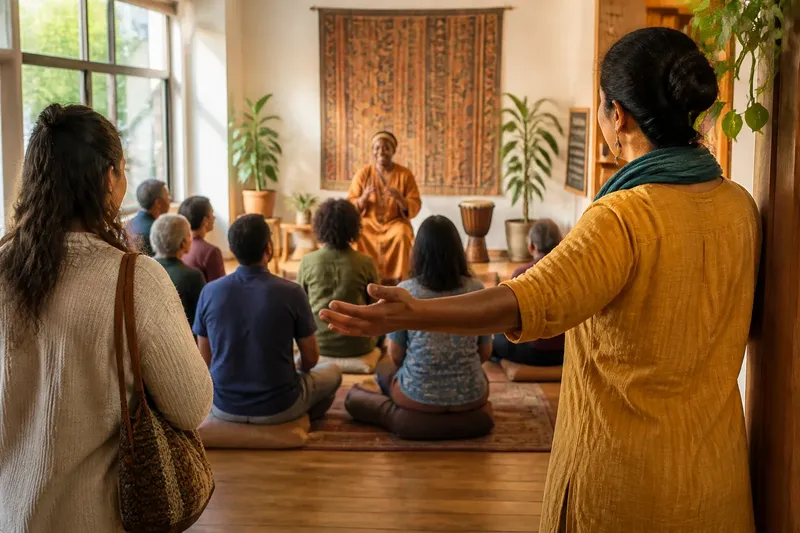
The welcome often sets the audience’s role before the main performance begins. Notice who greets people, whether the greeting comes from a performer or another host, and whether anyone gives context about the event. Some gatherings begin with conversation or introductions; others move directly into music, movement, or storytelling.
A host might explain where to sit, when to respond, or whether visitors are invited to participate. Treat that guidance as helpful information, not a test of belonging. If you arrive while people are already gathering, pause to observe the room before choosing a seat. A visible host or usher can answer a practical question without interrupting the event.
Notice whether newcomers receive a specific invitation or are simply welcomed to watch. That distinction can clarify your role without requiring you to guess.
Read audience customs by watching for repeated cues
Look for signals that recur, rather than treating one person’s reaction as a rule. The audience may clap at certain moments, answer a performer, keep still during a passage, or make room for movement. Notice whether a clear cue starts the response and whether others follow it.
Customs can shift within the same event. A lively response in one moment does not mean conversation is welcome throughout, and a quiet audience is not necessarily disengaged. Watch the relationship between the stage and the room: does a performer pause for an answer, gesture toward the audience, or continue without inviting a reply?
When the cue is uncertain, listening is a considerate choice. Follow an obvious group response, wait for a direct invitation, or ask a host before the performance. Avoid turning one brief custom into a broad conclusion about a community.
Notice how performers and viewers shape the exchange
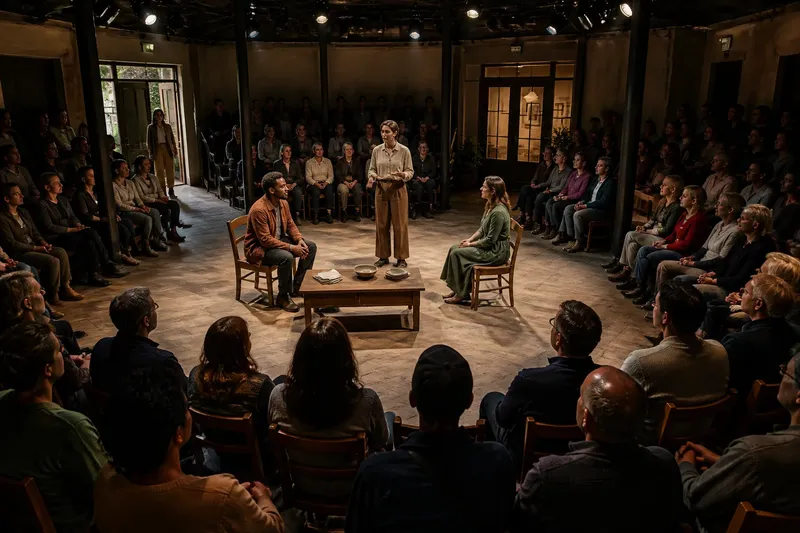
Pay attention to where the focus moves. Performers may address the whole room, speak to one person, respond to a sound from the audience, or leave a pause for viewers to complete a refrain. These moments can show whether audience participation is part of the event or whether viewers are being invited simply to listen.
Distinguish an invitation from an expectation. A performer might ask a question and accept silence, or encourage a chorus the audience already knows. If participation is unclear, listening is a valid response. You do not need to perform along to show respect.
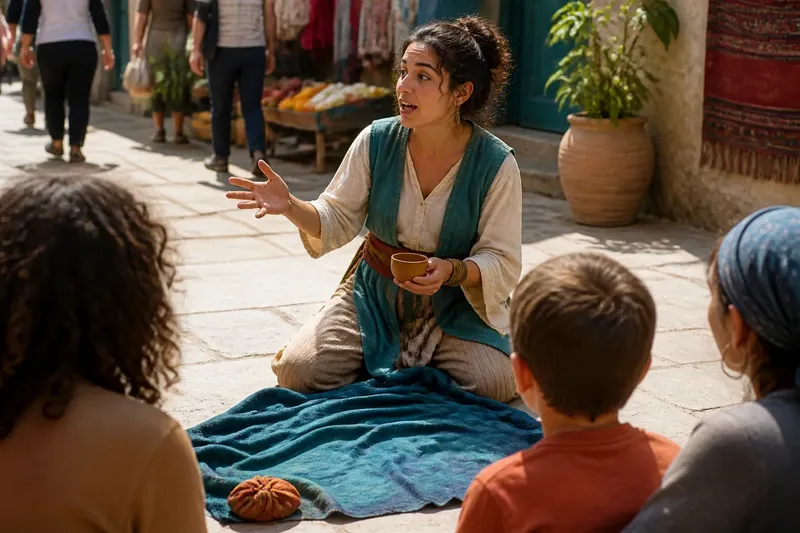
Say you attend a neighborhood storytelling evening where the host teaches a short response before a tale begins. You listen to the cue, hear nearby viewers answer together, and join on the next clear invitation. The expected result is that you can take part without interrupting the story or guessing when to speak.
Choose a place that lets you see and hear without blocking others
Follow the host’s seating guidance, whether you are in a hall or a community room. Choose a place with a clear view and comfortable hearing, while leaving paths and entrances open. If people move during the performance, stay aware of the space around you.
Let your attention include more than the central action. A singer’s way of addressing listeners, a storyteller’s pause, or a change in the room after an audience response can all help you understand the event’s rhythm.
Phones, photography, food, and late arrivals can affect other people’s attention. Follow posted guidance or ask an organizer before recording. If no instruction is visible, keep your phone quiet and your movements unobtrusive.
Ask about a specific cue when you need more context
A brief, focused question can help you understand a custom without asking one person to explain an entire tradition. Before the event, you might ask, “Are visitors invited to join the chorus?” Afterward, you could ask, “Was there a cue I should have watched for?” An organizer or performer can choose how much context to share.
Keep questions connected to what you observed. Describe a gesture plainly rather than assuming it has one fixed meaning. Some details may be personal, ceremonial, or simply outside the scope of an informal conversation; accept a short answer or a change of subject.
What should you do when a custom is unclear?
Should you join when the audience starts responding?
Join when the cue is clear and the response is easy to follow. If you are unsure whether newcomers are included, listen first or check with the host.
Is it rude to stay quiet?
No. Quiet attention can be an appropriate way to participate when the cues are unfamiliar. Follow a direct invitation if one comes, without assuming that silence is a problem.
Can you take photos or record a song?
Ask the organizer or follow posted guidance before recording. Some gatherings welcome photographs, while others ask viewers to keep the moment unrecorded.
What should you do if you arrive late?
Wait for a natural pause or ask an usher where to enter instead of crossing in front of performers or viewers during an intense moment. If there is no clear opening, follow the host’s direction.
Keep a specific memory of your first community performance
Afterward, note one detail about the welcome, one audience cue, and one moment when performers and viewers seemed to shape the event together. Write down what happened, such as “the host invited a spoken reply,” rather than a broad judgment such as “everyone was welcoming.” Specific observations can help you recognize patterns at another performance without treating one gathering as a rule for all others.
A first community performance is easier to approach when you give yourself room to observe before joining. Notice the invitation, follow what is clear, and leave space for customs you have not learned yet. If you remember one cue and one question afterward, you will have a useful starting point for your next visit.